Vitamin B12 is essential for life, yet the body can absorb only a small amount of it from food at any one time.
This white paper reviews the science of vitamin B12 absorption – from the intrinsic factor pathway that limits uptake from food, to the passive diffusion route that makes high-dose oral supplementation effective.
It explains why food alone often falls short, which groups are most at risk of low B12 status, how cyanocobalamin and methylcobalamin differ in stability, and how advanced delivery formats – liposomal encapsulation and oral dissolvable films (ODFs) – extend the options available to consumers and healthcare professionals.
Executive Summary
Vitamin B12 is essential, but the body absorbs only a small amount from food. Food relies on a single route – the intrinsic factor pathway – which saturates at around 1.5–2.5 µg per meal and is further impaired by ageing, acid-reducing medicines, metformin and gastrointestinal conditions.
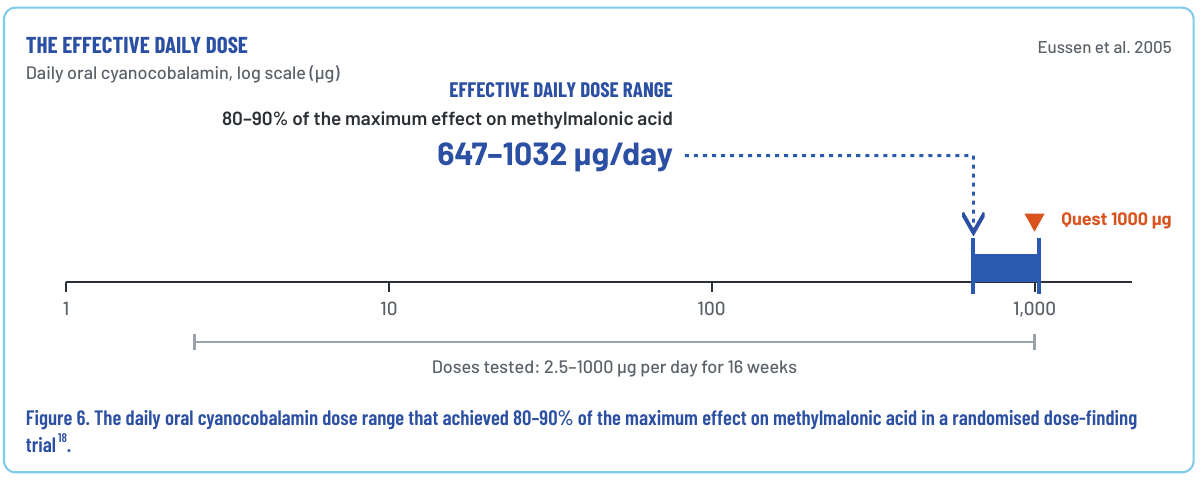
High-dose oral B12 overcomes this limit. Around 1% of any oral dose is absorbed by passive diffusion, independently of intrinsic factor, so a 1000 µg dose delivers far more than food can. Randomised trials show oral B12 corrected deficiency as effectively as injections, and that daily doses of 647–1032 µg achieve 80–90% of the maximum effect.
The form and format of B12 matter. Stable cyanocobalamin maintains the labelled dose throughout shelf life; liposomal encapsulation protects the active methylcobalamin form and may add an auxiliary route of uptake; and oral dissolvable films add absorption through the mouth while making daily supplementation easier for more people.
Introduction
Vitamin B12 (cobalamin) is a water-soluble, cobalt-containing vitamin that the human body cannot make for itself. It is made only by certain microorganisms and enters the human food chain almost exclusively through animal foods – meat, fish, eggs and dairy products1. Every person therefore depends on their diet, or on supplements, for a regular supply.
B12 is needed for energy metabolism, red blood cell formation, the nervous system and the immune system. Yet absorption of B12 is one of the most complex processes in human nutrition. It depends on stomach acid, on a protein called intrinsic factor and on a specific receptor in the small intestine – and that pathway can absorb only a limited amount at a time2,3.
At Quest, vitamin B12 is offered in three delivery formats: a high-strength cyanocobalamin tablet, a liposomal methylcobalamin capsule and a cyanocobalamin oral dissolvable film (ODF). This white paper explains the science behind each format – how B12 is absorbed, why high doses work, why the choice of B12 form matters for stability, and what liposomal and ODF delivery add.

The Role of Vitamin B12 in Health
Vitamin B12 acts as a coenzyme in two key reactions in the body. As methylcobalamin, it supports methionine synthase, which recycles homocysteine to methionine; as adenosylcobalamin, it supports methylmalonyl-CoA mutase in the mitochondria3. Through these reactions B12 contributes to several essential functions.
Energy Metabolism
B12 is a cofactor in the conversion of methylmalonyl-CoA to succinyl-CoA, a step that feeds the Krebs (tricarboxylic acid) cycle – the central pathway of cellular energy production. Low B12 status impairs energy metabolism and can present as tiredness, weakness and reduced physical and cognitive performance.
Red Blood Cell Formation
Working together with folate, B12 is needed for DNA synthesis, which is essential for the rapid cell division that produces red blood cells in the bone marrow. B12 deficiency leads to megaloblastic anaemia – large, immature red cells with a reduced capacity to carry oxygen – causing fatigue, breathlessness and pallor4.
Nervous System Function
B12 is required for the maintenance of myelin, the protective sheath that insulates nerve fibres and enables rapid nerve signal transmission. Prolonged deficiency can cause demyelination, with numbness, tingling and balance disturbances, and in severe cases subacute combined degeneration of the spinal cord4.
Homocysteine Metabolism and Cognitive Function
B12 works with folate and vitamin B6 to metabolise homocysteine. Elevated plasma homocysteine has been identified as a risk factor in vascular disease research5,6. In the VITACOG randomised controlled trial, supplementation with B vitamins including B12 slowed the rate of brain atrophy in older people with mild cognitive impairment7.
Authorised Health Claims
In the European Union, the following health claims are authorised for vitamin B128. Vitamin B12 contributes to:
- the reduction of tiredness and fatigue
- normal energy-yielding metabolism
- normal red blood cell formation
- normal functioning of the nervous system
- normal psychological function
- normal homocysteine metabolism
- normal function of the immune system
- and has a role in the process of cell division
Dietary Sources and Requirements
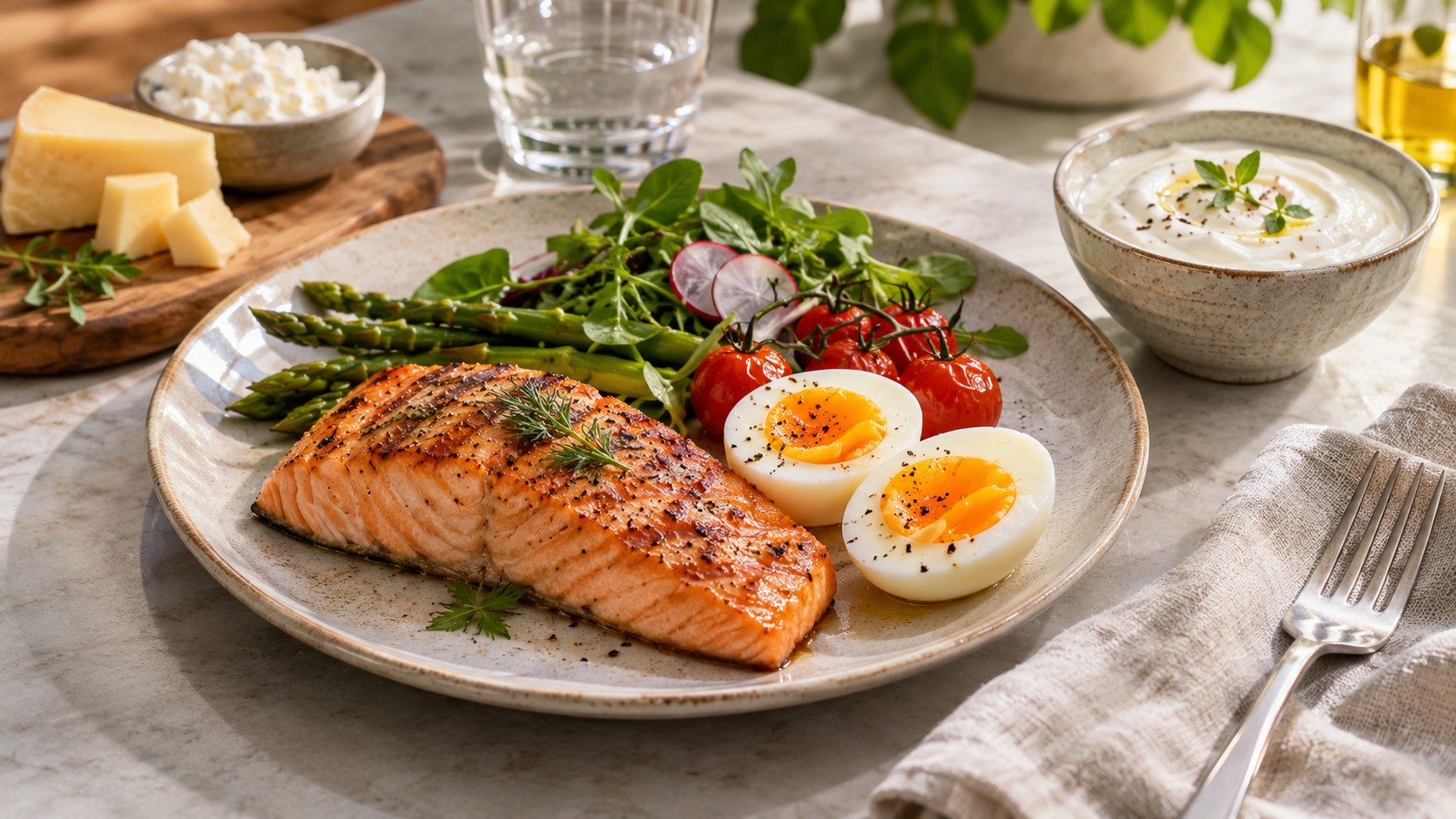
Meat, offal, fish, shellfish, eggs and dairy products are the main natural sources of vitamin B12. Plant foods contain little or no active B12 unless fortified, so people following vegetarian and especially vegan diets are at particular risk of low intake1.
The European Food Safety Authority (EFSA) has set an Adequate Intake of 4 µg per day for adults9. At first sight this appears easy to reach. The real limitation, however, is not how much B12 is eaten but how much is absorbed.
How Vitamin B12 Is Absorbed
Vitamin B12 can reach the bloodstream by three distinct routes. Understanding these routes explains why food delivers so little, why high-dose supplements work and what advanced formats add.
Route 1: The Intrinsic Factor Pathway
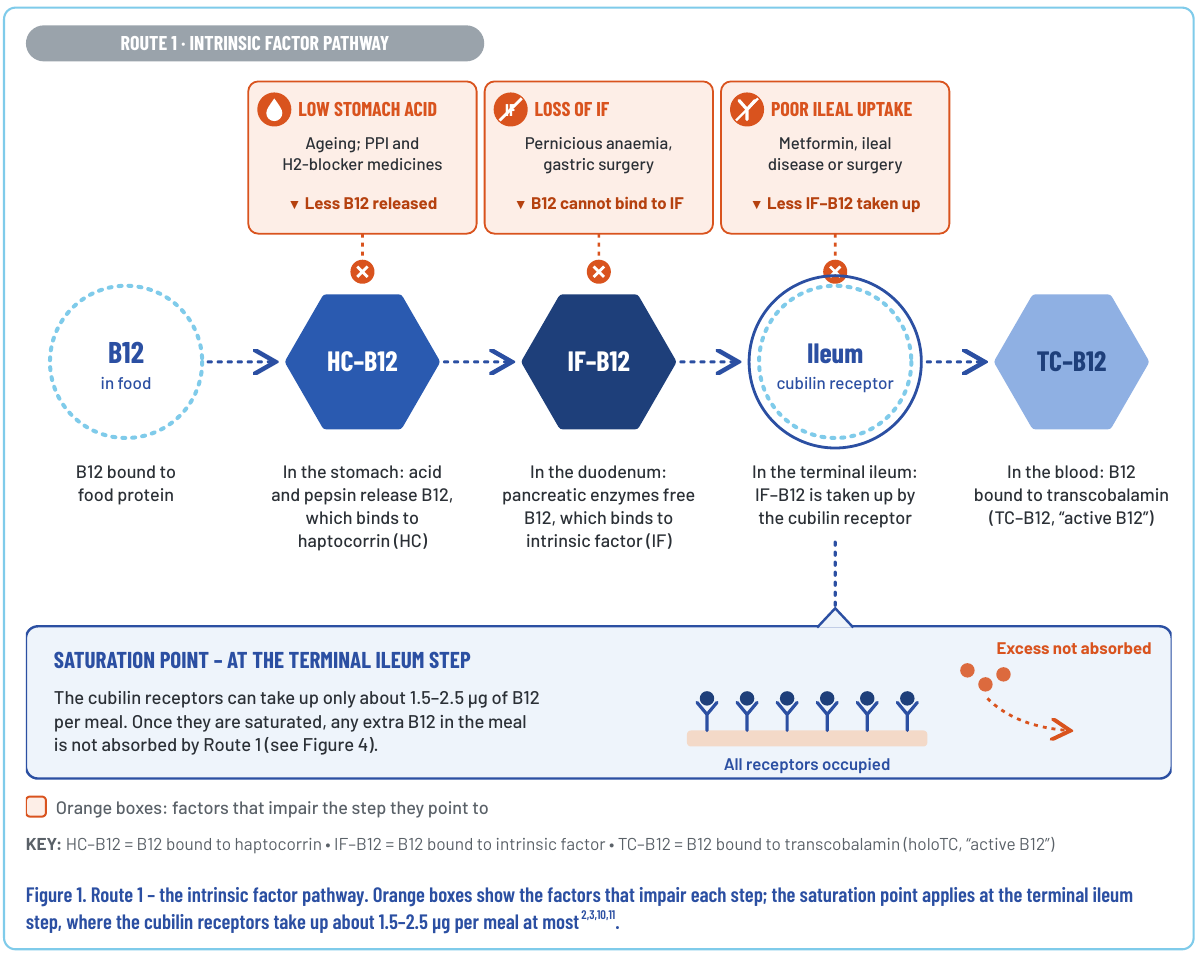
In food, B12 is bound to protein. Stomach acid and pepsin release it, after which B12 binds to haptocorrin (HC), a carrier protein from saliva and the stomach. In the duodenum, pancreatic enzymes break down haptocorrin, freeing B12 to bind to intrinsic factor (IF), a protein secreted by the parietal cells of the stomach. In the terminal ileum, the IF–B12 complex is taken up by the cubilin receptor, and B12 then enters the blood bound to transcobalamin as TC–B12 (holotranscobalamin, holoTC) – the fraction known as “active B12”2,3.
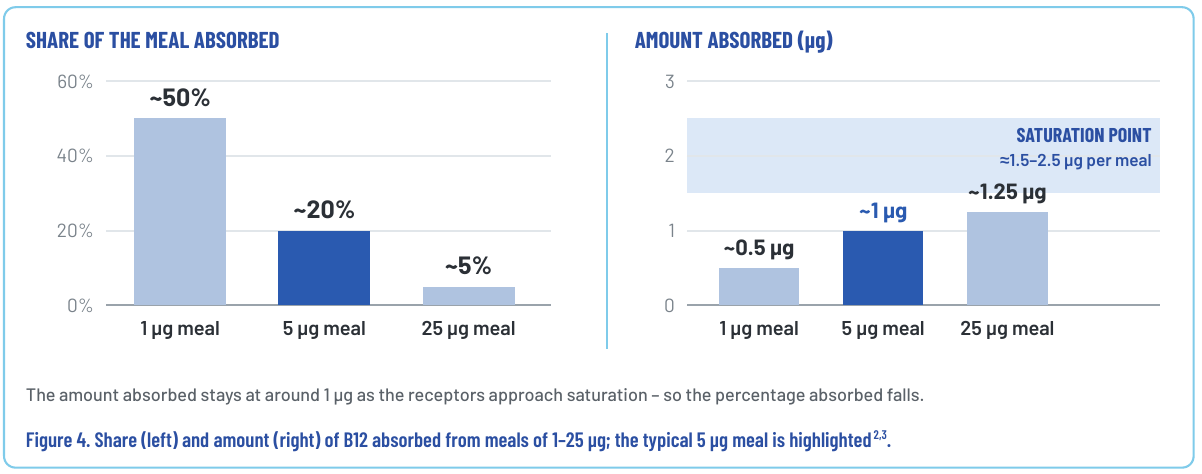
This pathway is efficient at low intakes but has a limited capacity: the ileal receptors become saturated at around 1.5–2.5 µg of B12 per meal, so taking more B12 at once does not increase uptake by this route2. Each step can also be impaired: low stomach acid (ageing, PPI and H2-blocker medicines) frees less B12 from food; loss of intrinsic factor (pernicious anaemia, gastric surgery) stops B12 binding to IF; and metformin or ileal disease can reduce uptake of IF–B12 in the ileum10,11.
Route 2: Passive Diffusion
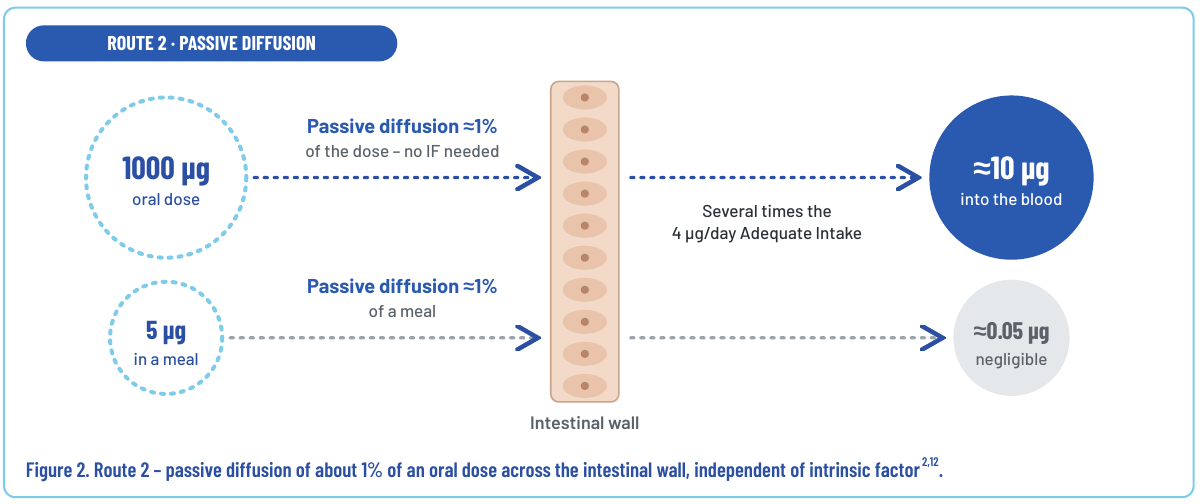
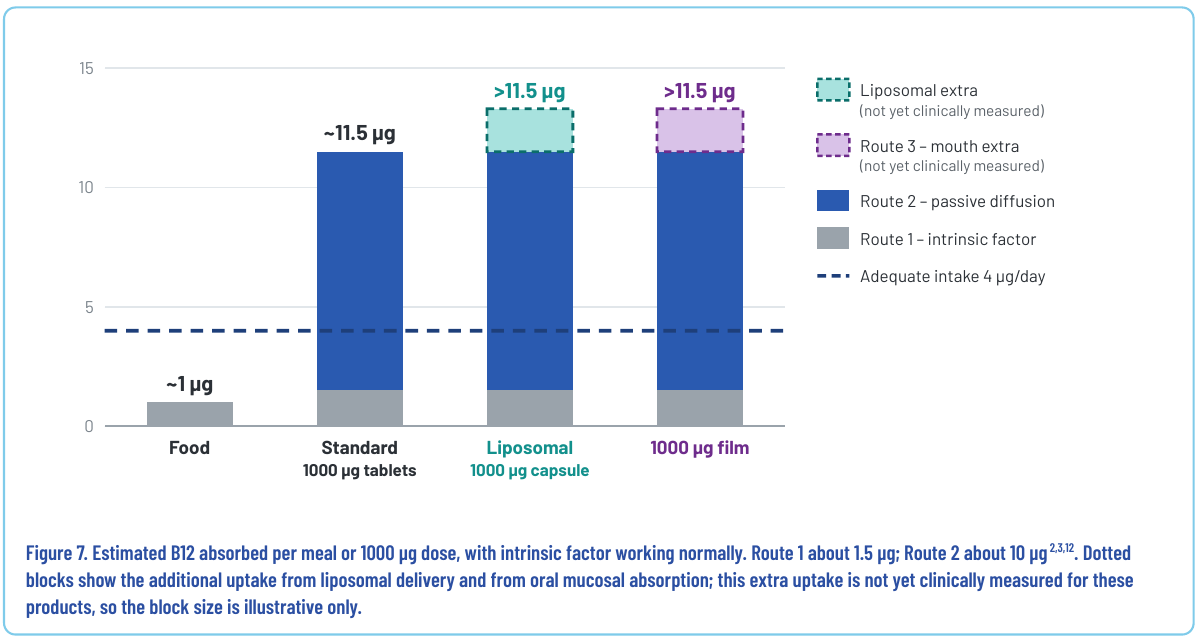
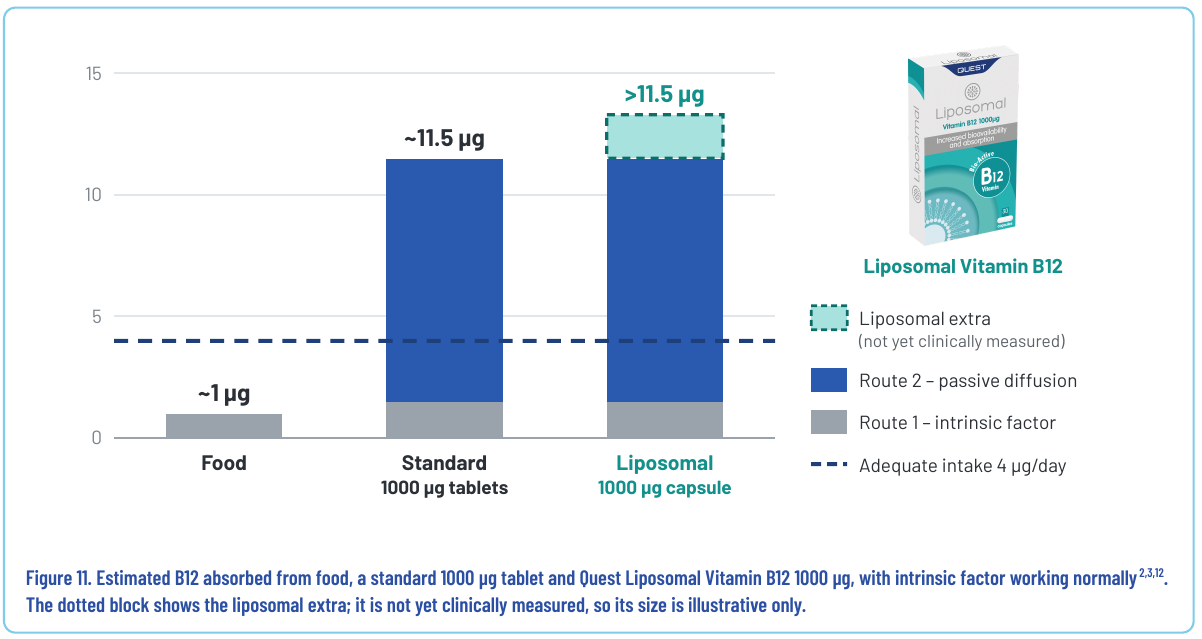
Independently of intrinsic factor, approximately 1% of any oral dose of B12 is absorbed by passive diffusion across the intestinal wall; neither stomach acid nor intrinsic factor is needed2,12. At the levels found in food this is negligible – about 0.05 µg from a meal providing 5 µg. At a supplemental dose of 1000 µg, however, it provides around 10 µg – several times the daily requirement.
Route 3: Absorption Across the Oral Mucosa
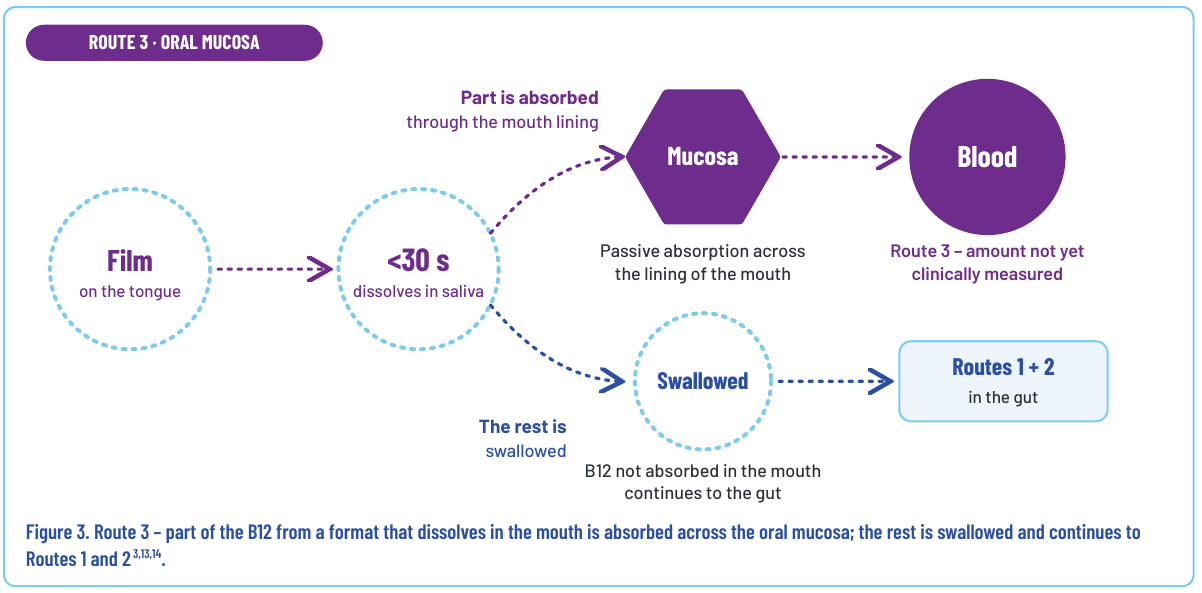
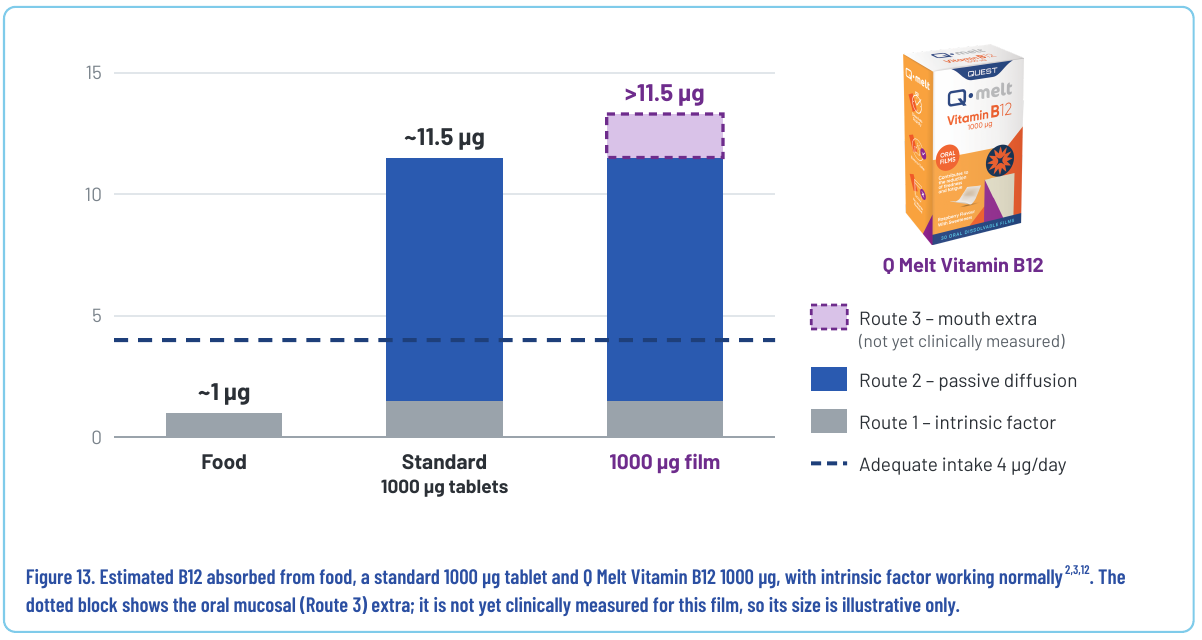
B12 can also be absorbed passively across mucous membranes, including those of the mouth and nose3. Small clinical studies have shown that B12 delivered through the nasal or oral mucosa can raise blood levels within an hour13,14. This route is only available to formats that dissolve in the mouth, such as oral dissolvable films; any B12 not absorbed in the mouth is swallowed and absorbed through Routes 1 and 2. This additional uptake through the mouth has not yet been clinically measured for supplements.
The Three Routes at a Glance
| Route | Mechanism | Capacity | Relevant to |
|---|---|---|---|
| Route 1 | Intrinsic factor and the ileal cubilin receptor; needs stomach acid | Saturates at about 1.5–2.5 µg per meal – extra B12 is not absorbed by this route | Food – the only meaningful route for food |
| Route 2 | Passive diffusion across the intestinal wall; no intrinsic factor needed | About 1% of the dose (≈10 µg from 1000 µg) | High-dose supplements. Negligible for food (≈0.05 µg from a 5 µg meal) |
| Route 3 | Passive absorption across the oral mucosa | Not yet clinically measured for supplements | Only high-dose supplements that dissolve in the mouth, e.g. oral films |
Why Food Alone Often Falls Short
For B12 in food, only Route 1 matters. Passive diffusion (Route 2) absorbs just 1% of the B12 in a meal – about 0.05 µg from 5 µg – which is too small to be relevant, and Route 3 does not apply to food2,12. Absorption from food is therefore governed entirely by the saturable intrinsic factor pathway.
Because that pathway saturates, the proportion of B12 absorbed falls as the amount in a meal rises: about 50% of a 1 µg intake, around 20% of a 5 µg intake – typical of a B12-rich meal – and only 5% of a 25 µg intake3. The amount absorbed stays at around 1 µg, because the cubilin receptors in the terminal ileum are approaching their saturation point2.
A Worked Example
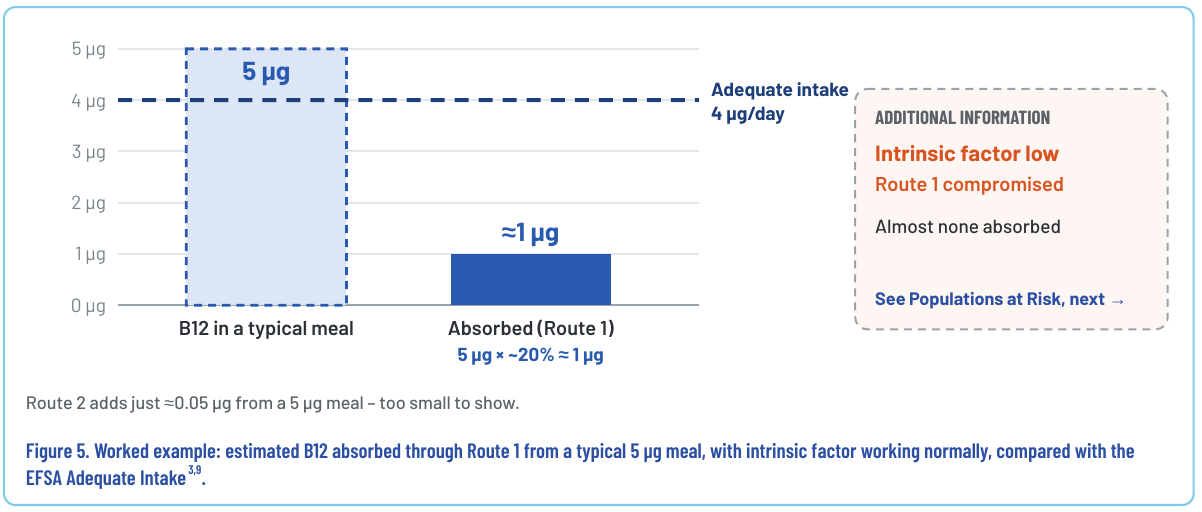
This example is based on a meal providing around 5 µg of B12 – an amount typical of a B12-rich meal containing meat, fish, eggs or dairy. With intrinsic factor working normally, about 20% is absorbed through Route 1: 5 µg × 20% ≈ 1 µg3. That is well below the EFSA Adequate Intake of 4 µg per day9. Where intrinsic factor or stomach acid is reduced, Route 1 is compromised and almost nothing is absorbed.

Populations at Risk of Low B12 Status
Low B12 status is usually caused by poor absorption of B12 from food or by low intake of B12-containing foods. Because B12 from food depends on the limited intrinsic factor pathway, people in the groups below may not reach adequate levels from diet alone and should consider a high-dose supplement, which does not rely on that pathway alone.
Older Adults
With age, atrophic gastritis reduces stomach acid and, in some people, intrinsic factor. The Institute of Medicine estimates that 10–30% of older people may be unable to absorb food-bound B12 normally, and advises adults over 50 to obtain most of their B12 from fortified foods or supplements2.
People Taking Metformin
Metformin can impair the calcium-dependent uptake of the IF–B12 complex in the ileum11. In a randomised placebo-controlled trial of 390 insulin-treated patients with type 2 diabetes followed for 4.3 years, metformin was associated with a 19% reduction in B12 concentration, and the absolute risk of B12 deficiency at the end of the study was 7.2 percentage points higher15. In June 2022 the UK MHRA advised testing serum B12 in patients on metformin if deficiency is suspected, and considering periodic B12 monitoring in those with risk factors for deficiency16.
Long-Term Use of Acid-Reducing Medicines
Stomach acid is needed to release B12 from food. In a case-control study of 25,956 patients with B12 deficiency and 184,199 controls, two or more years of proton pump inhibitor use was associated with 65% higher odds of deficiency (odds ratio 1.65), and two or more years of H2-receptor antagonist use with 25% higher odds; higher doses showed a stronger association10.
Vegetarians and Vegans
Because B12 is found almost exclusively in animal foods, deficiency is prevalent among vegetarians and more so among vegans, regardless of demographic characteristics or place of residence1. A reliable non-animal source is essential for these groups.
Gastrointestinal Conditions
Conditions that affect the stomach or terminal ileum – including pernicious anaemia, in which autoimmune damage leads to loss of intrinsic factor, gastric surgery and ileal disease – disrupt the intrinsic factor pathway and increase the risk of deficiency4.
Assessing B12 Status
Serum B12 is the usual first-line test. Where results are borderline, holotranscobalamin (active B12) or methylmalonic acid can help confirm deficiency4. Testing offers an objective basis for supplementation and for monitoring the response. Anyone with symptoms of deficiency, suspected pernicious anaemia or long-term medication use should seek advice from a pharmacist or doctor.
High-Dose Oral Vitamin B12: Evidence and Estimated Absorption
Because passive diffusion does not depend on intrinsic factor, high oral doses can deliver meaningful amounts of B12 even when the intrinsic factor pathway is impaired. This principle was first shown in 1968, when patients with pernicious anaemia – who lack intrinsic factor – were successfully treated with high oral doses of B1212.
Oral B12 Compared with Injections
In a randomised controlled trial, 38 newly diagnosed B12-deficient patients received either 2000 µg of oral cyanocobalamin daily or 1000 µg intramuscular injections on a tapering schedule for four months. Haematological and neurological abnormalities corrected equally quickly in both groups. At four months, mean serum B12 was 1,005 pg/mL in the oral group compared with 325 pg/mL in the injection group (P < .0005), and methylmalonic acid was lower in the oral group. The authors concluded that daily oral cyanocobalamin was as effective as injections and may be superior17.
Finding the Effective Oral Dose
A randomised, double-blind dose-finding trial in 120 older people with mild B12 deficiency compared daily oral cyanocobalamin doses from 2.5 µg to 1000 µg for 16 weeks. Higher doses produced larger falls in methylmalonic acid. Daily doses of 647–1032 µg achieved 80–90% of the estimated maximum reduction, and the authors concluded that the lowest dose needed to normalise mild deficiency is more than 200 times the recommended dietary allowance18.
Estimated Absorption by Delivery Format
Bringing the three routes together shows why a high oral dose delivers far more B12 than food. With intrinsic factor working normally, a 1000 µg dose provides about 1.5 µg through Route 1 and about 10 µg through Route 2 – around 11.5 µg in total. Liposomal delivery and oral dissolvable films each add a further contribution, described later in this paper.
Forms of Vitamin B12: Cyanocobalamin and Methylcobalamin
Several forms of vitamin B12 are used in supplements. The two most common are cyanocobalamin and methylcobalamin. Both are effective sources of B12, but they differ markedly in stability.
Cyanocobalamin
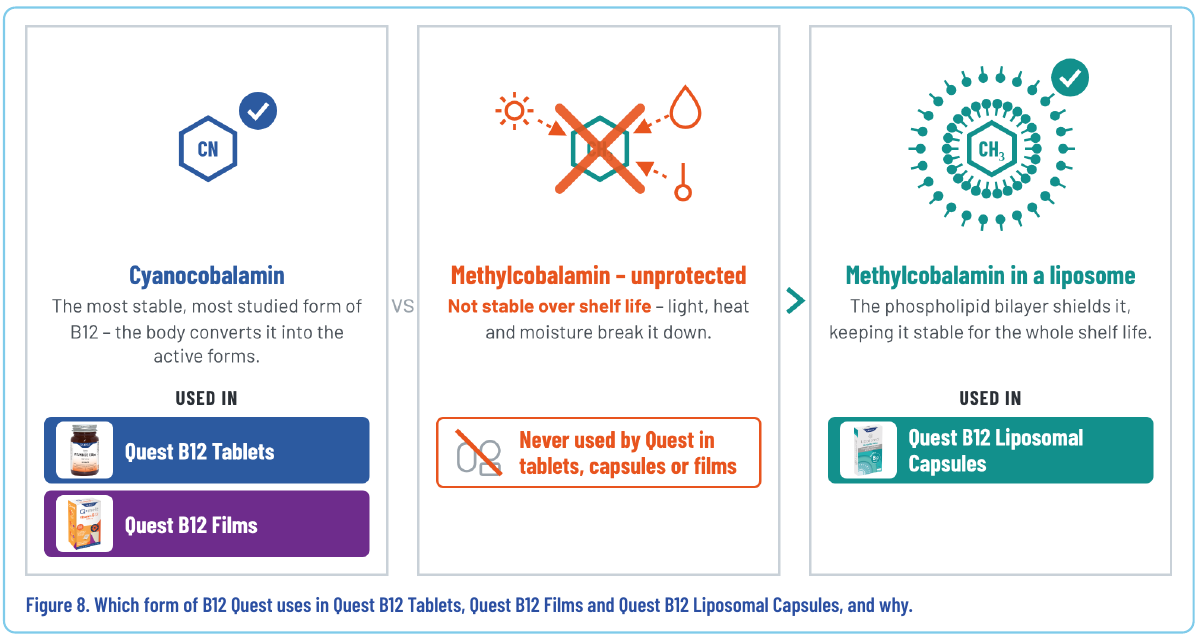
Cyanocobalamin is the most studied and most stable form of vitamin B12, and the form most commonly used in supplements and food fortification3. After absorption, cells convert it into the two active coenzyme forms, methylcobalamin and adenosylcobalamin. It was the form used in the landmark oral dosing trials described above17,18.
Methylcobalamin
Methylcobalamin is one of the body’s active coenzyme forms and can be used directly. However, it is sensitive to light, heat and moisture19. Unprotected in conventional tablets, capsules or films, methylcobalamin is more likely than cyanocobalamin to lose potency over shelf life, and may therefore deliver less than the labelled amount by the end of its shelf life.
| Cyanocobalamin | Methylcobalamin | |
|---|---|---|
| Type | Stable precursor, converted to active forms in cells | Active coenzyme form |
| Stability | High – the most stable form of B12 | Sensitive to light, heat and moisture |
| Evidence base | The most studied and researched form – used in the landmark clinical trials | Fewer clinical studies |
| Typical use | Supplements, fortified foods, clinical trials | Supplements, especially premium formats |
| Quest use | Vitamin B12 1000 µg tablets; Q Melt B12 film | Liposomal Vitamin B12 only, protected inside liposomes |
The Quest Approach
Quest uses cyanocobalamin in its tablet and ODF formats so that the labelled dose is maintained throughout shelf life. Methylcobalamin is used only in liposomal form, where the phospholipid bilayer encloses and protects it. This allows the active form to be offered with the stability needed for a full shelf life.

Liposomal Vitamin B12
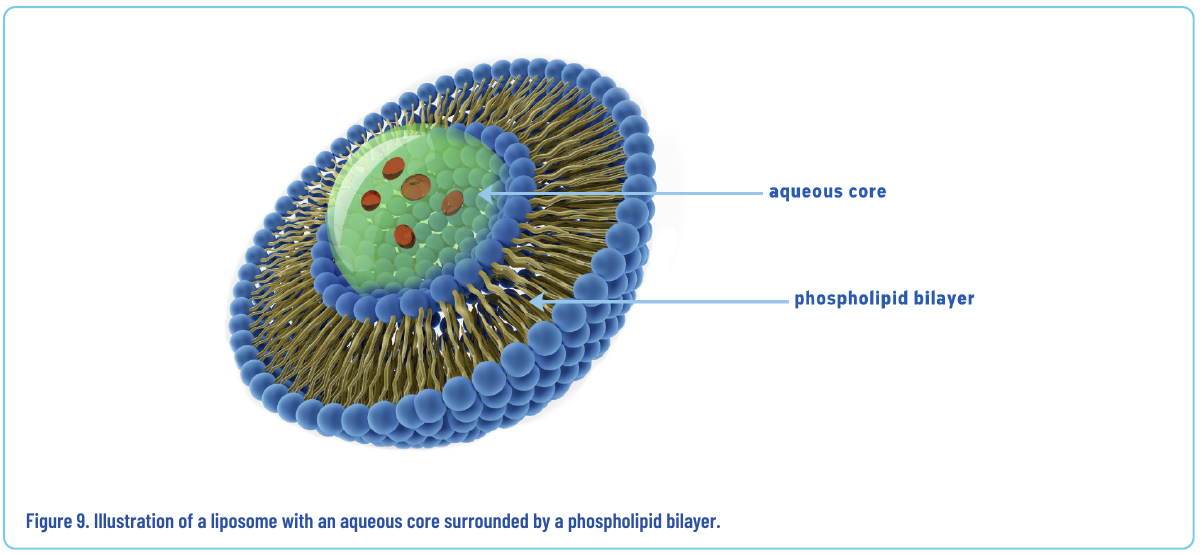
Liposomes are nanoscale phospholipid vesicles: microscopic spherical envelopes with an aqueous core surrounded by a phospholipid bilayer arranged like a cell membrane. Water-soluble nutrients such as vitamin B12 are encapsulated within the aqueous core20.
Protection Through Shelf Life and Digestion
The phospholipid bilayer acts as a barrier around the active nutrient, increasing its resistance to digestive enzymes, stomach acid, intestinal flora and oxidation20. For methylcobalamin this provides two benefits: stability on the shelf and protection during passage through the digestive tract.
Cellular Uptake and an Auxiliary Route of Absorption
Interactions between the liposome’s phospholipid bilayer and the membranes of intestinal cells can facilitate cellular uptake through endosomal mechanisms. Because liposomes can interact directly with intestinal cell membranes, they may help a portion of vitamin B12 to be absorbed through membrane-mediated uptake – an auxiliary route that does not depend on intrinsic factor, which may be valuable in people whose intrinsic factor pathway is impaired.
Laboratory Evidence
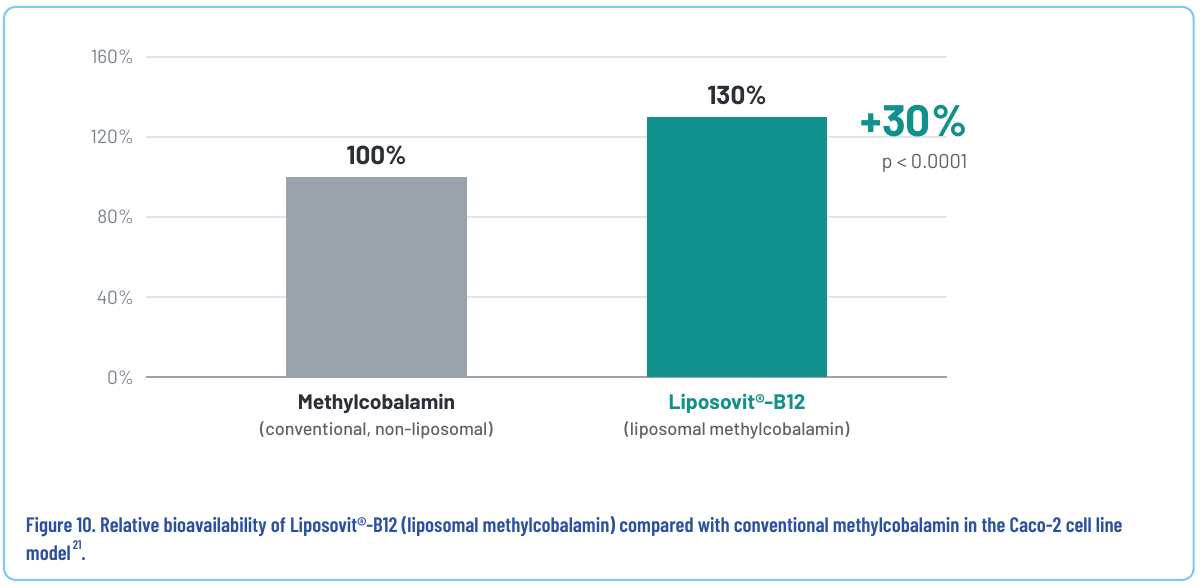
In an in vitro Caco-2 intestinal cell model, Liposovit®-B12 – methylcobalamin encapsulated in liposomes – showed significantly higher transport across the intestinal cell layer than conventional, non-liposomal methylcobalamin. Relative bioavailability was approximately 30% higher for the liposomal form (average of three independent experiments; Student’s t-test, p < 0.0001)21. These results show that liposomal encapsulation enhanced B12 transport in a widely used laboratory model of intestinal absorption; the size of the benefit in humans has not yet been clinically measured.
The Liposomal Contribution
On top of the about 11.5 µg delivered by Routes 1 and 2 from any 1000 µg oral dose, liposomal delivery may add a further contribution. Two mechanisms are thought to explain the extra uptake seen in the laboratory:
- Protection: the phospholipid bilayer shields methylcobalamin from stomach acid, digestive enzymes and oxidation, so more of the dose reaches the absorptive lining of the small intestine intact20.
- Membrane-mediated uptake: because the bilayer is built like a cell membrane, liposomes can adhere to and fuse with the membranes of intestinal cells or be taken in by endocytosis, carrying their B12 into the cell by a route that does not depend on intrinsic factor or the saturable cubilin receptor20,22.
Together these effects are consistent with the approximately 30% higher transport seen in the Caco-2 model21. This extra is not yet clinically measured for Liposomal Vitamin B12, so it is shown without a value.
Manufacturing and Quality
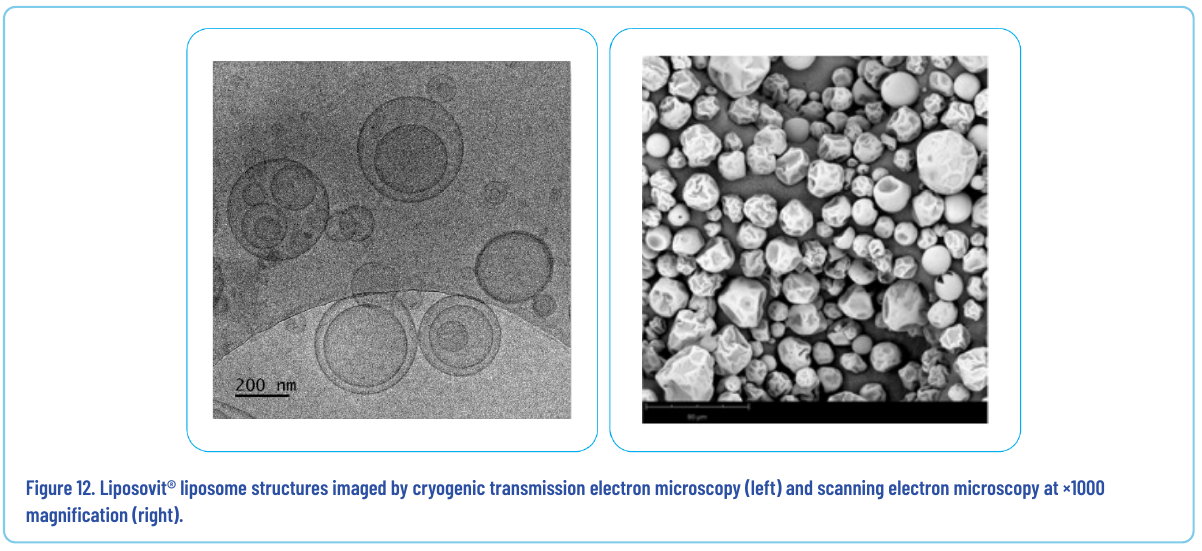
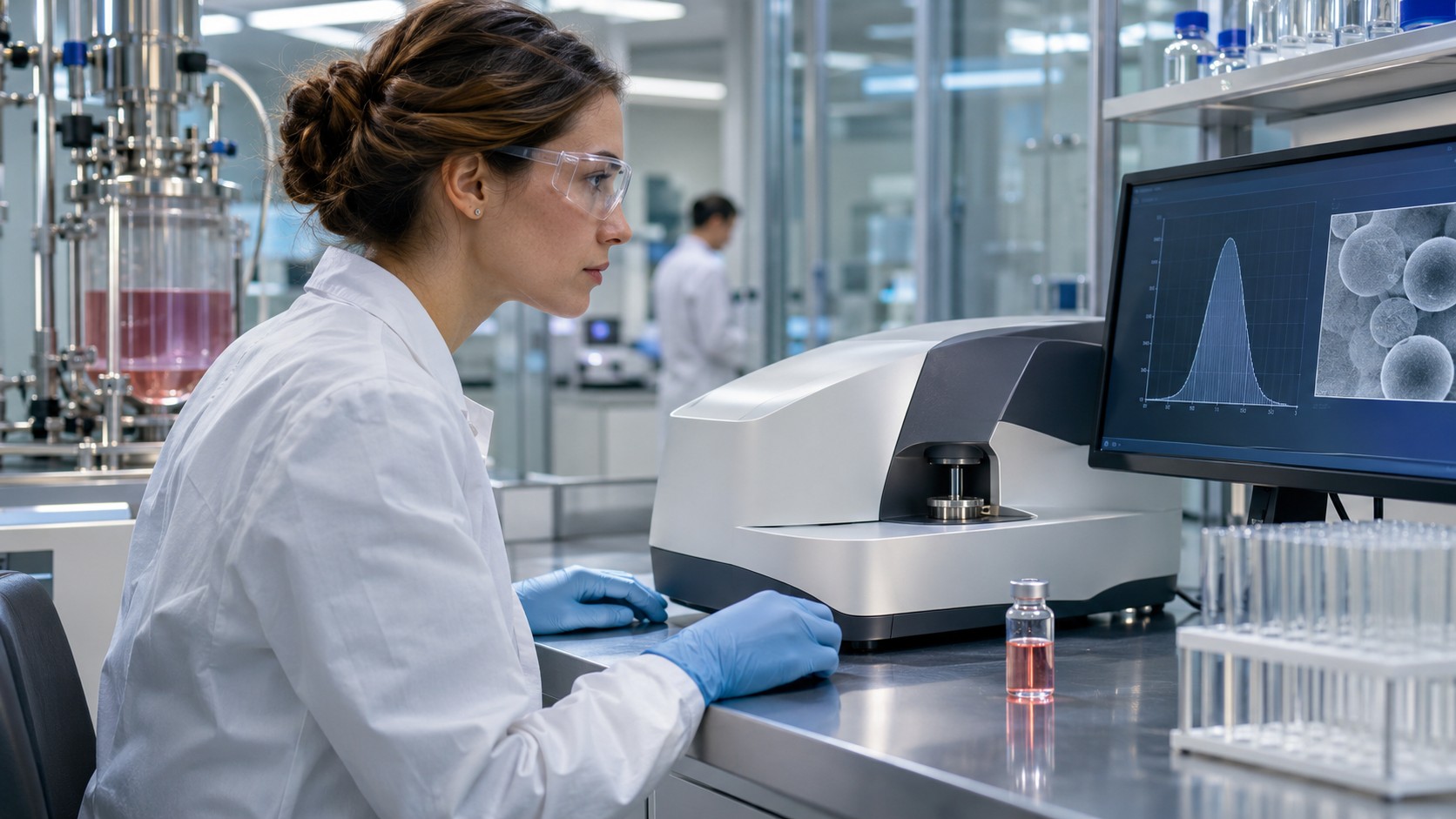
The liposomal nutrients used by Quest are supplied by Liposovit® and manufactured using a carefully controlled process. Liposome structures are verified by cryogenic transmission electron microscopy and scanning electron microscopy. Particle size plays a vital role in nanoparticle adhesion to, and interaction with, biological cells22,23. Quest uses liposomal nutrients within a particle size of 200–400 nanometres, with liposome size and size distribution determined using a LUMiSizer® 651 particle size analyser.
Oral Dissolvable Film Vitamin B12
Oral dissolvable films (ODFs) are thin, flexible polymeric films, typically 50–3,000 micrometres thick, that dissolve on the tongue within seconds without water, chewing or swallowing a tablet. Originally developed as breath-freshening strips, ODF technology has evolved into a sophisticated delivery platform for nutrients and medicines.
Formulation
Q Melt Vitamin B12 provides 1000 µg of cyanocobalamin in an HPMC and pullulan film-forming matrix. The B12 is protected by a beta-cyclodextrin stabiliser and the antioxidants vitamin E and ascorbyl palmitate, and the film carries a raspberry flavour with sweeteners. Each film dissolves in under 30 seconds and is individually sachet-sealed for hygiene, portability and moisture protection, with a 36-month shelf life. In preclinical testing, a cyanocobalamin film produced plasma B12 levels similar to a marketed B12 oral strip24.
A Third Route of Absorption
Because an ODF dissolves in the mouth, B12 can be absorbed across the oral mucosa (Route 3) as well as through the gut. B12 that is swallowed is then absorbed through the intrinsic factor pathway (Route 1) and passive diffusion (Route 2), as with any high-dose oral supplement3,13,14. Mouth absorption is not yet clinically measured for this film, so its contribution is shown without a value.
Format Benefits and Compliance
A supplement only works if it is taken consistently. The ODF format suits people with tablet fatigue or a high pill burden – such as those managing type 2 diabetes – people who find tablets difficult to swallow, and busy consumers who want an on-the-go option that needs no water.
In-House Manufacturing at Quest’s GMP-Certified Film Facility
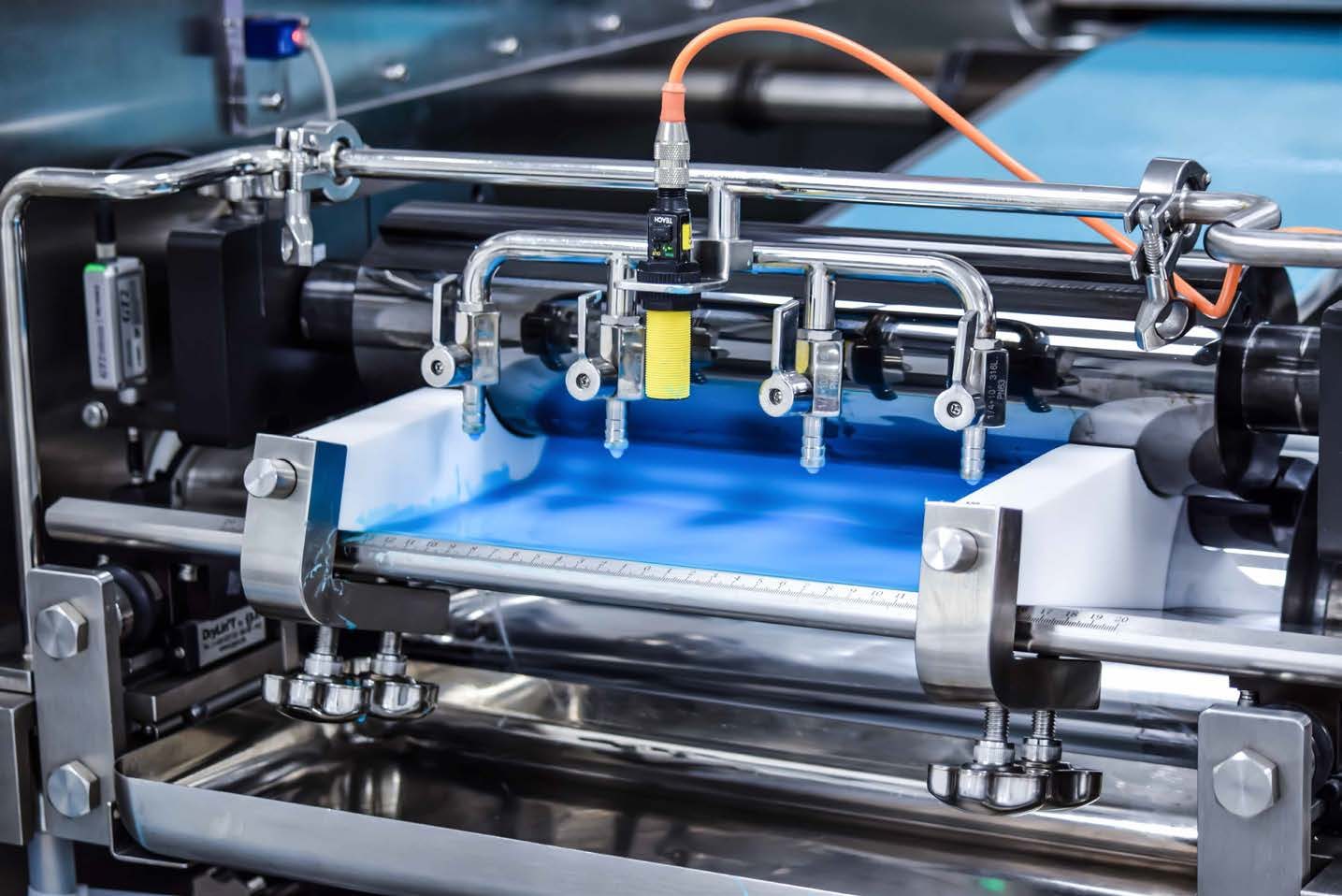
Quest manufactures its ODFs in-house in a dedicated, fully automated oral film facility under full Good Manufacturing Practice (GMP) certification. Production follows a controlled sequence of formulation, precision film casting, controlled drying, slitting, cutting and primary packaging, with full in-house analytical testing from raw materials to batch release – ensuring end-to-end quality, supply security and batch consistency.
Comparison of Vitamin B12 Delivery Formats
| Format | Quest | Key advantages | Key limitations |
|---|---|---|---|
| Tablet (cyanocobalamin) | Yes | Proven high-dose oral delivery; most stable form; cost-effective. 1000 µg sits within the 647–1032 µg daily range shown to give 80–90% of the maximum effect18 | Requires water; adds to pill burden; harder for people with swallowing difficulties |
| Liposomal capsule (methylcobalamin) | Yes | Active form kept stable; protected through digestion; enhanced uptake in laboratory models; auxiliary intrinsic factor-independent route. 1000 µg within the 647–1032 µg effective range18 | Requires water to swallow; premium cost |
| Oral dissolvable film (cyanocobalamin) | Yes | No water needed; dissolves in under 30 seconds; adds oral mucosal absorption; portable, pre-measured 1000 µg dose within the 647–1032 µg effective range18 | – |
| Sublingual drops or spray | Not offered by Quest | No swallowing; mucosal exposure; can provide doses within the 647–1032 µg effective range18 | Dose varies with technique; taste and portability can limit use |
| Intramuscular injection | Prescription medicine – not a Quest format | Bypasses the gut; standard treatment for severe deficiency | Invasive; requires a healthcare professional; injection-site discomfort; in a randomised trial, serum B12 at four months was lower with injections than with daily oral B12 (325 vs 1,005 pg/mL)17 |
Matching the Format to the Consumer
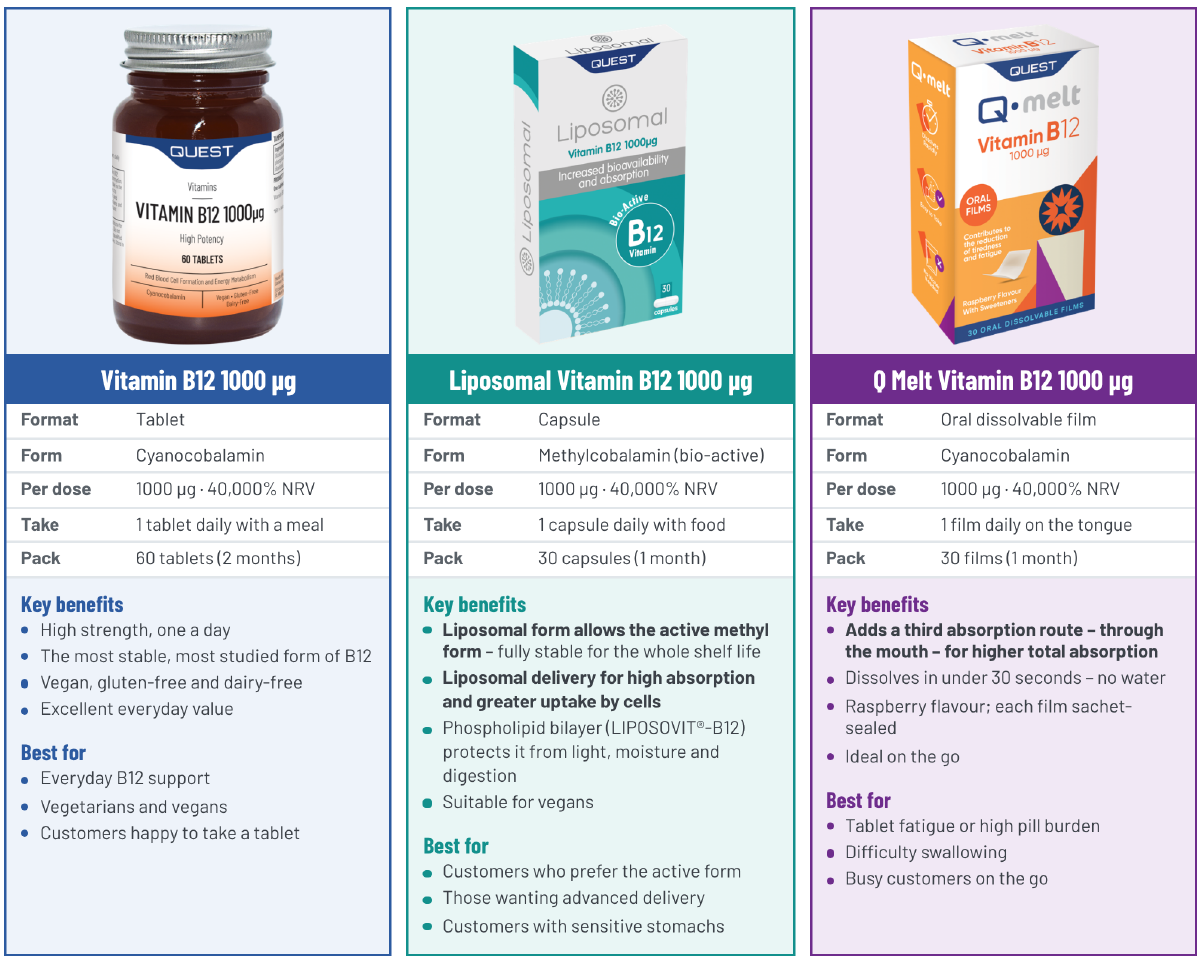
Because every Quest format provides the same 1000 µg dose, the choice of product can be guided by preference, diet and daily routine – the best format is the one a consumer will take every day.
The Quest Vitamin B12 Range
Every Quest B12 product provides 1000 µg – a high dose that does not rely on the normal route of absorption from food. The difference is the format: choose the one each customer will take every day.
Regulatory Considerations
In the European Union, vitamin B12 food supplements are regulated under Directive 2002/46/EC. Cyanocobalamin, hydroxocobalamin, 5′-deoxyadenosylcobalamin and methylcobalamin are permitted sources of vitamin B12 for use in food supplements25. Health claims must comply with Regulation (EC) No 1924/2006 and use the wording authorised in Regulation (EU) No 432/20128,26.
The EU Scientific Committee on Food concluded that it was not possible to set a tolerable upper intake level for vitamin B12, as no clearly defined adverse effects have been identified, and found no evidence that current intakes from food and supplements represent a health risk27. Liposomal nutrients with a particle size above 100 nm fall outside the focus of EU nanomaterial rules; Quest’s liposomes are within the 200–400 nm range.
Scientific References
- Pawlak R, Parrott SJ, Raj S, et al. How prevalent is vitamin B12 deficiency among vegetarians? Nutr Rev. 2013;71(2):110-7.
- Institute of Medicine. Dietary Reference Intakes for Thiamin, Riboflavin, Niacin, Vitamin B6, Folate, Vitamin B12, Pantothenic Acid, Biotin, and Choline. Washington, DC: National Academies Press; 1998.
- Allen LH, Miller JW, de Groot L, et al. Biomarkers of Nutrition for Development (BOND): vitamin B-12 review. J Nutr. 2018;148(Suppl 4):1995S-2027S.
- Devalia V, Hamilton MS, Molloy AM. Guidelines for the diagnosis and treatment of cobalamin and folate disorders. Br J Haematol. 2014;166(4):496-513.
- Clarke R, Daly L, Robinson K, et al. Hyperhomocysteinemia: an independent risk factor for vascular disease. N Engl J Med. 1991;324(17):1149-55.
- Homocysteine Studies Collaboration. Homocysteine and risk of ischemic heart disease and stroke: a meta-analysis. JAMA. 2002;288(16):2015-22.
- Smith AD, Smith SM, de Jager CA, et al. Homocysteine-lowering by B vitamins slows the rate of accelerated brain atrophy in mild cognitive impairment: a randomized controlled trial. PLoS One. 2010;5(9):e12244.
- Commission Regulation (EU) No 432/2012 establishing a list of permitted health claims made on foods, other than those referring to the reduction of disease risk and to children’s development and health.
- EFSA Panel on Dietetic Products, Nutrition and Allergies. Scientific opinion on dietary reference values for cobalamin (vitamin B12). EFSA J. 2015;13(7):4150.
- Lam JR, Schneider JL, Zhao W, Corley DA. Proton pump inhibitor and histamine 2 receptor antagonist use and vitamin B12 deficiency. JAMA. 2013;310(22):2435-42.
- Bauman WA, Shaw S, Jayatilleke E, et al. Increased intake of calcium reverses vitamin B12 malabsorption induced by metformin. Diabetes Care. 2000;23(9):1227-31.
- Berlin H, Berlin R, Brante G. Oral treatment of pernicious anemia with high doses of vitamin B12 without intrinsic factor. Acta Med Scand. 1968;184(4):247-58.
- Slot WB, Merkus FW, Van Deventer SJ, Tytgat GN. Normalization of plasma vitamin B12 concentration by intranasal hydroxocobalamin in vitamin B12-deficient patients. Gastroenterology. 1997;113(2):430-3.
- Vitetta L, Zhou J, Manuel R, et al. Route and type of formulation administered influences the absorption and disposition of vitamin B12 levels in serum. J Funct Biomater. 2018;9(1):12.
- de Jager J, Kooy A, Lehert P, et al. Long term treatment with metformin in patients with type 2 diabetes and risk of vitamin B-12 deficiency: randomised placebo controlled trial. BMJ. 2010;340:c2181.
- Medicines and Healthcare products Regulatory Agency. Metformin and reduced vitamin B12 levels: new advice for monitoring patients at risk. Drug Safety Update. 2022;15(11). 20 June 2022.
- Kuzminski AM, Del Giacco EJ, Allen RH, Stabler SP, Lindenbaum J. Effective treatment of cobalamin deficiency with oral cobalamin. Blood. 1998;92(4):1191-8.
- Eussen SJ, de Groot LC, Clarke R, et al. Oral cyanocobalamin supplementation in older people with vitamin B12 deficiency: a dose-finding trial. Arch Intern Med. 2005;165(10):1167-72.
- Temova Rakuša Ž, Roškar R, Hickey N, Geremia S. Vitamin B12 in foods, food supplements, and medicines – a review of its role and properties with a focus on its stability. Molecules. 2022;28(1):240.
- Akbarzadeh A, Rezaei-Sadabady R, Davaran S, et al. Liposome: classification, preparation, and applications. Nanoscale Res Lett. 2013;8(1):102.
- Bart. Relative bioavailability of Liposovit®-B12 in the Caco-2 cell line model. Liposovit® data on file (full citation to be confirmed).
- Verma A, Stellacci F. Effect of surface properties on nanoparticle-cell interactions. Small. 2010;6(1):12-21.
- Win KY, Feng SS. Effects of particle size and surface coating on cellular uptake of polymeric nanoparticles for oral delivery of anticancer drugs. Biomaterials. 2005;26(15):2713-22.
- Suryawanshi D, et al. J Drug Deliv Sci Technol. 2021;63:102559.
- Directive 2002/46/EC of the European Parliament and of the Council on the approximation of the laws of the Member States relating to food supplements. Annex II as substituted by Commission Regulation (EC) No 1170/2009 and subsequently amended.
- Regulation (EC) No 1924/2006 of the European Parliament and of the Council on nutrition and health claims made on foods.
- Scientific Committee on Food. Opinion on the Tolerable Upper Intake Level of vitamin B12. SCF/CS/NUT/UPPLEV/42 Final. Brussels: European Commission; 28 November 2000.
Download Technical Paper
By entering your name and email address we may contact you by email or phone, subject to our privacy policy.